
Gentec-EO · laser beam measurement
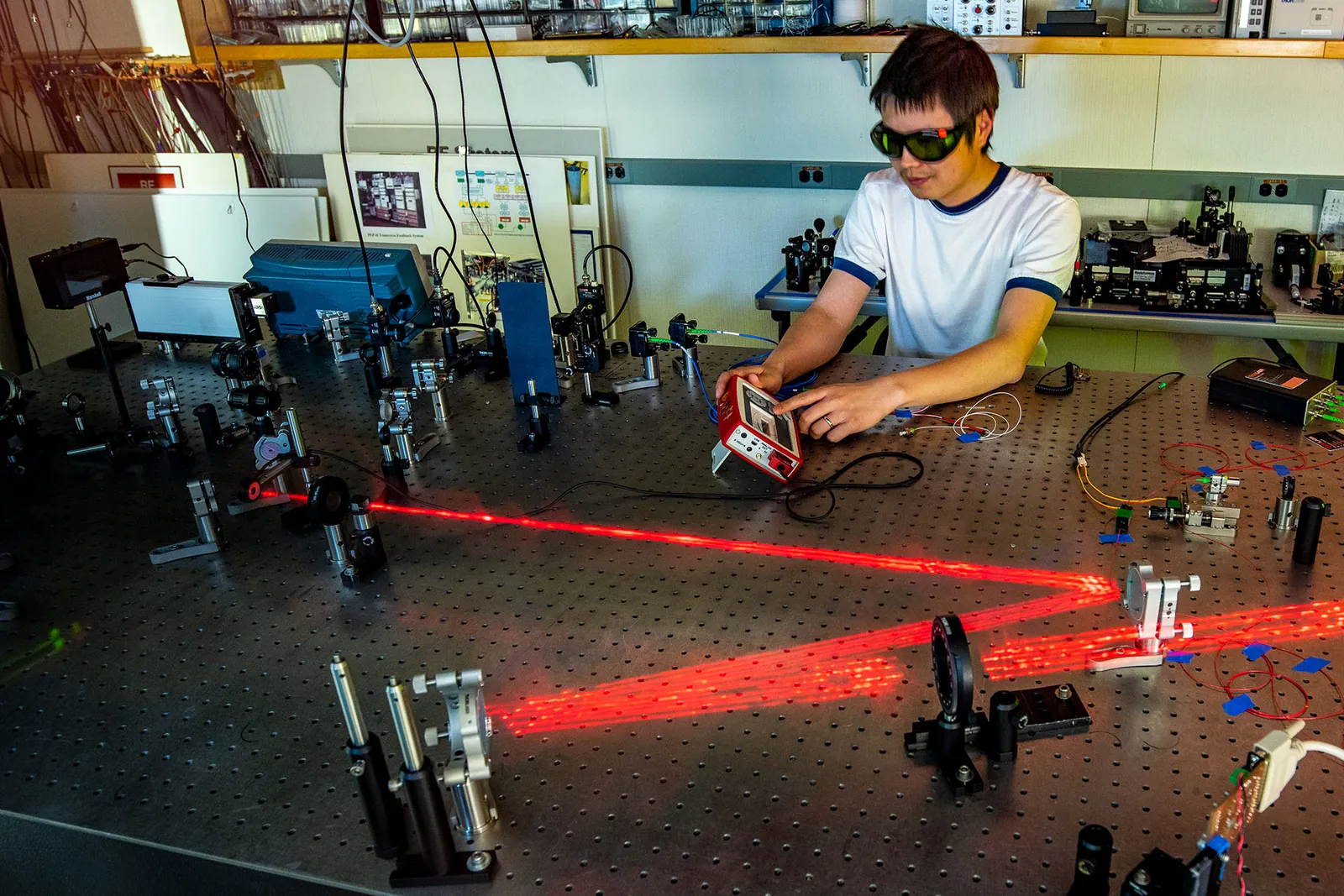
Laser power meters that show what your laser delivers
Gentec-EO detectors, meters and beam diagnostics for research laboratories, industrial laser users, medical and aesthetic laser services and universities.
On this page
Overview
Why measure laser power and energy
Laser output drifts with age, contamination of optics and misalignment. Regular measurement of power (for continuous-wave lasers) or energy per pulse (for pulsed lasers) keeps processes repeatable, confirms systems are within specification, and supports safety and maintenance programmes.
A measurement system has two parts: a detector matched to your wavelength, power or energy range and beam size, and a meter or PC interface that displays and logs the reading. Choosing the right combination is what makes laser power meters accurate.
Gentec-EO has manufactured laser power and energy meters since 1972. As its authorised distributor in Pakistan, we help you select the right detector and display for each laser.
What we supply
Gentec-EO laser power meters and detectors we supply
Detectors and displays matched to your laser.
Thermal power detectors
Thermopile detectors for laser power across a wide range of powers and wavelengths.
Photodiode power detectors
High-sensitivity detectors for low-power lasers.
Pyroelectric energy detectors
Pulse-by-pulse energy measurement for pulsed lasers.
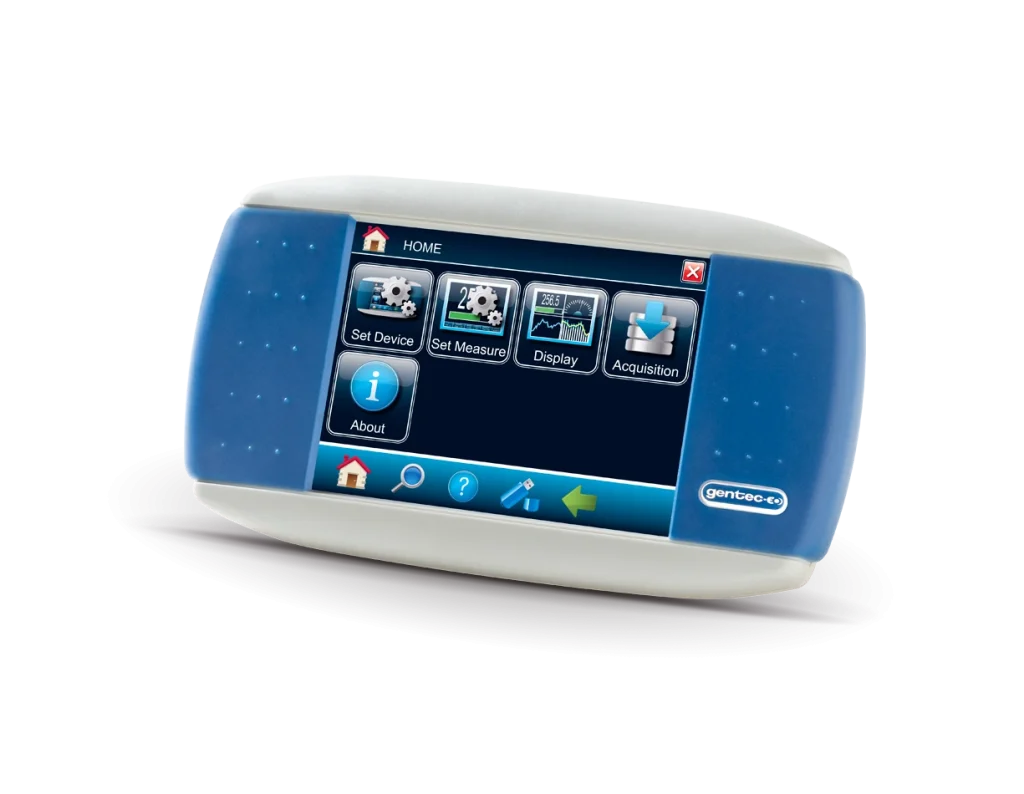
MAESTRO meter
Touchscreen power and energy display with real-time, scope and statistics modes and USB, Ethernet and analog outputs.
PRONTO series
Compact pocket-sized laser power meters for quick checks in the field and on the production floor.
Beam profiling & THz
Beam profiling cameras and terahertz detectors for specialised applications.
Test methods
Laser measurement reference
Key parameters to match when selecting a detector.
| Parameter | Why it matters |
|---|---|
| Wavelength | Detector response and calibration depend on wavelength. |
| Average power or pulse energy | Defines detector type and range. |
| Repetition rate & pulse width | Determines whether to measure energy per pulse or average power. |
| Beam diameter | Must fit the detector aperture and stay below damage thresholds. |
| Power or energy density | Prevents detector damage at high intensities. |
| Test method | ISO 11554 covers laser power, energy and temporal characteristics. |
Buying guide
How to choose laser power meters
Five questions that pick the right detector.
CW or pulsed?
Continuous-wave lasers are characterised by power in watts; pulsed lasers by energy per pulse in joules (and average power). This choice decides thermal, photodiode or pyroelectric detectors.
What wavelength?
Detectors are calibrated for specific wavelength ranges. Confirm your laser’s wavelength, including any harmonics.
What power or energy range?
Pick a detector whose range covers your laser with headroom, without sacrificing resolution at the low end.
Beam size and density
The beam must fit the aperture, and power density must stay below the detector’s damage threshold.
How will you read and log?
MAESTRO suits lab benches; PRONTO suits quick field checks; PC interfaces suit automated testing and data logging.
Technical guide
Laser power meters explained: a technical guide
Thermal detectors for power
Thermopile detectors absorb the laser beam and measure the resulting temperature difference. They handle a wide range of powers and wavelengths and are the workhorse of laser power meters for continuous-wave lasers.
Photodiode detectors for low power
Photodiodes are highly sensitive and suit low-power lasers, such as alignment lasers or fibre-coupled sources, but they are wavelength-dependent and saturate at higher powers.
Pyroelectric detectors for energy
Pyroelectric detectors respond to changes in temperature, making them ideal for measuring the energy of individual laser pulses at suitable repetition rates.
Choosing the display
A touchscreen meter such as MAESTRO suits laboratory benches, a pocket meter such as PRONTO suits quick field checks, and PC interfaces suit automated test stations and logging.
Damage thresholds and safety
Every detector has a maximum power density and energy density. Exceeding them can damage the absorber permanently. Beam expansion, attenuators and correct detector selection protect your investment, and laser safety procedures protect your staff.
Calibration and traceability
Laser power meters should be recalibrated periodically to maintain accuracy, particularly when they are used to verify medical or industrial laser output.
Integrating measurement into maintenance
Regular laser power measurement during maintenance shows when output is falling, so optics can be cleaned or components replaced before process quality suffers.
Standards
Laser power meters standards explained
ISO 11554
Specifies test methods for laser beam power, energy and temporal characteristics, including how to measure average power and pulse energy.
ISO 11146
Defines methods for measuring laser beam widths, divergence angles and beam propagation ratios, relevant when beam profiling is required.
IEC 60825-1
The international standard for safety of laser products, defining laser classes and the basis for laser safety practices.
Calibration traceability
Laser power meters are calibrated against reference standards so measurements are traceable; recalibration intervals depend on use and quality requirements.
Wavelength correction
Detector response varies with wavelength, so meters apply wavelength correction factors set by the user. Entering the correct wavelength is essential for accuracy.
Measurement uncertainty
Every laser power measurement has an uncertainty that combines calibration, wavelength, linearity and beam conditions. Understanding it helps set realistic acceptance limits.
Budgeting
Laser power meters: what affects the price in Pakistan
Indicative factors that change a quotation. We always explain the options so you can balance budget and capability.
Detector type
Thermal, photodiode and pyroelectric detectors differ in price according to range and features.
Power and energy range
High-power detectors with water cooling cost more than low-power heads.
Display or interface
MAESTRO touchscreen meters and PC interfaces differ in features and cost.
Aperture size
Larger apertures for wide beams increase cost.
Accessories
Attenuators, adapters and mounting hardware add to the system.
Calibration
Periodic recalibration is an ongoing cost.
Applications
Who uses laser power meters
Research laboratories
Physics, photonics and materials research.
Industrial laser processing
Cutting, welding, marking and engraving systems.
Medical & aesthetic lasers
Output verification as part of service and maintenance.
Laser service engineers
Field checks before and after repairs.
Universities
Optics and laser teaching laboratories.
Defence & government labs
Laser system characterisation.
Set-up checklist
Laser power meters buying checklist
Work through these points and your quotation will be faster and more accurate.
- Record laser type, wavelength and mode (CW or pulsed)
- Record maximum power or pulse energy
- Record repetition rate and pulse width
- Measure beam diameter at the detector
- Check power or energy density against detector damage thresholds
- Choose display, pocket meter or PC interface
- Plan mounting and alignment
- Consider cooling for high-power detectors
- Plan recalibration intervals
- Train users on safe measurement practice
After-sales
Calibration and support
Laser detectors should be recalibrated periodically to maintain accuracy. We coordinate recalibration with Gentec-EO and help you plan calibration intervals.
We advise on detector selection, accessories and safe measurement practice.
Typical set-ups
Typical laser power meters configurations
Three common starting points. Every quotation is tailored to your tests and budget.
Field service kit
A PRONTO pocket meter for quick power checks during laser maintenance.
Laboratory bench
A MAESTRO meter with thermal and pyroelectric detectors for CW and pulsed lasers.
Advanced characterisation
Adds beam profiling, PC interfaces and multiple detectors for research and system development.
Avoid these
Common laser power meters buying mistakes
Wrong detector type
Using a power detector for single pulses, or vice versa, gives misleading results.
Exceeding damage threshold
High power density can permanently damage a detector.
Ignoring wavelength
Calibration depends on wavelength; specify it correctly.
Aperture too small
The whole beam must enter the detector.
No cooling for high power
High-power detectors may need water or forced-air cooling.
Skipping recalibration
Detector response changes over time.
Maintenance
Maintenance and calibration schedule
A practical routine that keeps results accurate. Always follow the manufacturer instructions and your quality system.
| Interval | Recommended tasks |
|---|---|
| Before use | Inspect detector surface for damage; confirm wavelength setting. |
| Weekly | Clean housings; check cables and connectors. |
| Monthly | Compare against a reference reading for drift. |
| Annually | Recalibrate detectors with the manufacturer. |
| As needed | Replace damaged detectors or absorbers. |
Request for quotation
Laser power meters quotation checklist
- Laser type
- Wavelength
- Power or pulse energy
- Repetition rate
- Pulse width
- Beam diameter
- Display or PC interface
- Logging needs
- Delivery city
- Calibration needs
Local support
Laser power meters support across Pakistan
As Gentec-EO’s authorised distributor in Pakistan, we help research labs, industrial users and medical laser services select detectors and meters.
We coordinate recalibration with Gentec-EO and advise on safe measurement practice.
Glossary
Laser power meters glossary
CW laser
A continuous-wave laser with steady output power.
Pulse energy
Energy delivered in a single laser pulse, in joules.
Thermopile
A thermal detector used for power measurement.
Pyroelectric detector
A detector that measures pulse energy.
Damage threshold
The maximum power or energy density a detector can safely receive.
Beam profile
The intensity distribution across a laser beam.
Repetition rate
Number of pulses per second.
Responsivity
Detector output per unit of incident power.
Related equipment
Further reading: Gentec-EO
FAQ
Laser power meters: frequently asked questions
Power meter or energy meter: which do I need?
Continuous-wave lasers are characterised by power; pulsed lasers usually by energy per pulse, and also average power. Tell us your laser type, wavelength, power or energy, repetition rate and beam diameter and we will match the right detector.
Can one display work with different detectors?
Yes. Gentec-EO meters such as MAESTRO work with a range of compatible power and energy detectors, so one display can serve several lasers.
Which standard covers laser power measurement?
ISO 11554 specifies test methods for laser beam power, energy and temporal characteristics.
How often should laser detectors be recalibrated?
Typically annually, depending on use and your quality system. We coordinate recalibration.
Do you supply laser power meters to hospitals and clinics?
Yes. Medical and aesthetic laser service teams use them to verify output during maintenance.
Can one detector measure several lasers?
If wavelengths and ranges overlap, yes; otherwise you may need more than one detector.
Do high-power lasers need water-cooled detectors?
Very high powers often require water or forced-air cooling.
Can laser power meters log data?
Yes, via MAESTRO data logging or PC interfaces.
Do you support research labs at universities?
Yes, with detectors for teaching and research setups.
How do I avoid damaging a detector?
Check power and energy density against the detector’s damage threshold and use attenuators when needed.
Do you supply laser safety eyewear?
Laser safety equipment can be sourced on request; specify your wavelength and power.
Can laser power meters measure LED or lamp sources?
Some detectors can; discuss your source with us.
How quickly can detectors be delivered?
Lead times depend on model; we confirm in the quotation.
Can laser power meters measure fibre lasers?
Yes, with suitable detectors and fibre adapters for the wavelength and power of your fibre laser.
What is the difference between average power and peak power?
Average power is the mean output over time; peak power is the maximum during a pulse. Pulsed lasers can have very high peak power even when average power is modest.
Can one meter measure both power and energy?
MAESTRO supports both power and energy detectors, so one display can be used with different heads.
Do laser power meters need warm-up?
Thermal detectors need time to reach equilibrium; follow the manufacturer’s guidance for stable readings.
Can measurements be logged automatically?
Yes, using meters with logging functions or PC software and interfaces.
Are your laser power meters suitable for aesthetic clinics?
Yes, they are used to verify output of aesthetic and medical lasers during maintenance and service.
What happens if I choose the wrong detector?
A detector below your power or energy level may be damaged; one far above it may lack resolution. Matching range, wavelength and beam size avoids both problems.
Can laser power meters measure through protective windows?
Windows absorb and reflect some light, so readings through them will differ. Measure the beam directly where possible or account for window losses.
How do I measure a high-repetition-rate pulsed laser?
At high repetition rates, average power measurement with a thermal detector is usually more practical than single-pulse energy measurement.
Do you supply beam profilers?
Yes, Gentec-EO beam profiling cameras are available for applications that need beam size, shape and quality data.
Can I use one laser power meter for several wavelengths?
Thermal detectors cover broad wavelength ranges with correction factors; check that every wavelength you use is within the detector’s calibrated range.
Who calibrates Gentec-EO detectors?
Gentec-EO calibrates its detectors; we coordinate recalibration for customers in Pakistan.
How should detectors be stored when not in use?
Keep detector apertures covered, store them in their cases away from dust and moisture, and avoid touching absorber surfaces, which are easily contaminated.
What information appears on a calibration certificate?
Certificates typically state calibration wavelengths, results, uncertainty and the reference standards used, giving traceability for your measurements.
Can we borrow a meter for a one-off check?
Contact us to discuss your requirement; we will advise on the most practical option for occasional measurement needs.
Which detector suits a CO2 laser used for cutting?
CO2 lasers emit at 10.6 µm and usually deliver tens to thousands of watts, so a broadband thermal detector rated for the power and beam size, often with water or forced-air cooling, is the usual choice.
Can one detector serve a laser workshop with several machines?
Yes, if the machines’ wavelengths and power levels fall within the detector’s ranges. A single MAESTRO display can also be paired with different detector heads as needed.
Request a quote
Get a quote for laser power meters
An engineer replies within one working day with a recommendation and a quotation.
- Phone+92 21 3416 2044
- WhatsApp+92 331 229 5410
- Emailsales@comprehensive-sol.com
- OfficePlot No. 400, Delhi Saudagaran Society, Shah Faisal Colony, Karachi 75210