
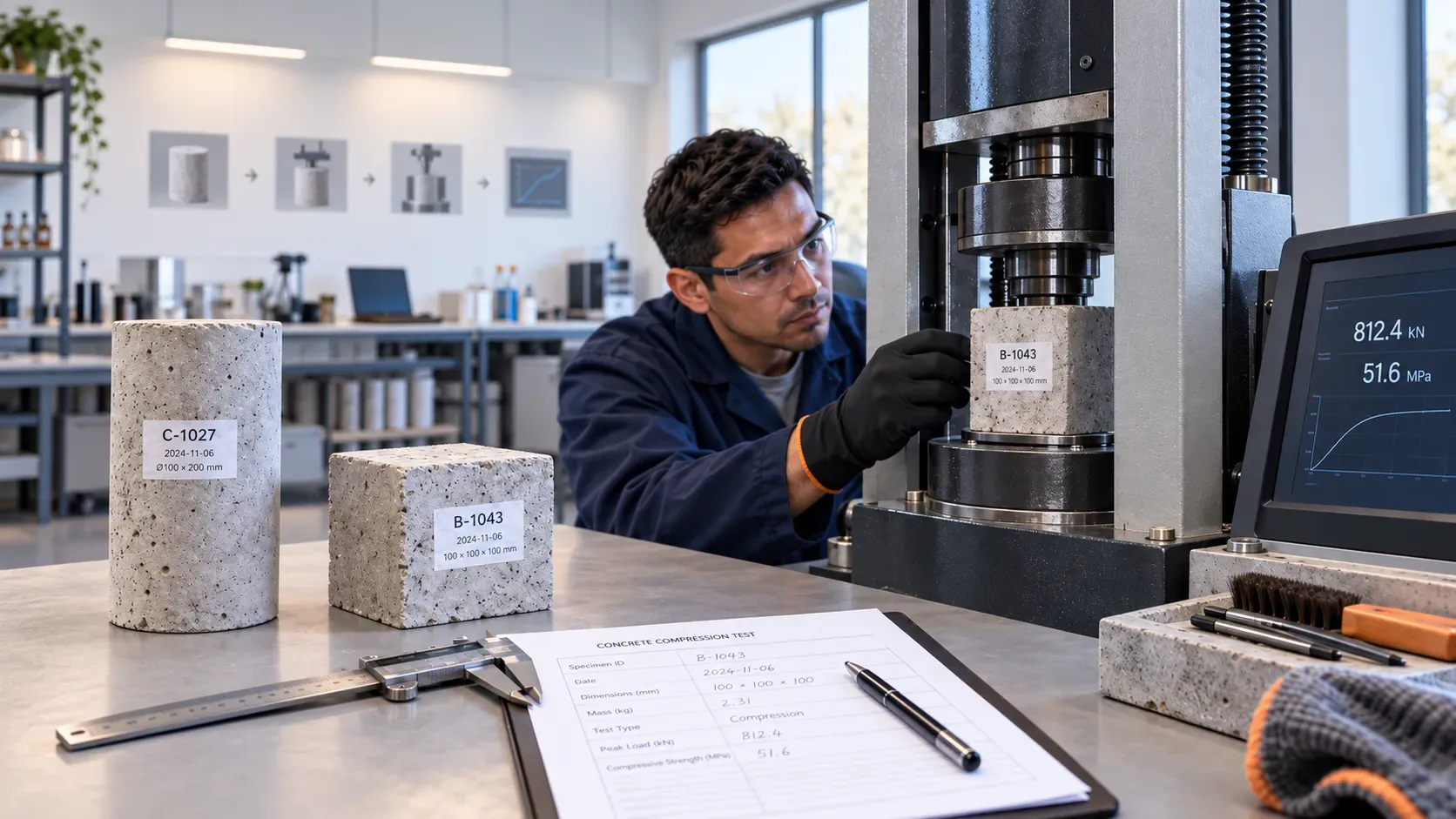
Construction materials · fresh & hardened concrete
Concrete testing equipment for strength you can prove
Equipment to test fresh and hardened concrete, aggregates and reinforcing steel for ready-mix plants, contractors, consultants, precast producers and construction laboratories.
On this page
Overview
Concrete testing equipment from batching plant to structure
Concrete quality is checked at several stages. Fresh concrete is tested on site for workability and air content. Hardened specimens are cured and tested in the laboratory for compressive, flexural and tensile strength. The in-place structure is assessed with non-destructive methods and drilled cores, and aggregates and reinforcing steel are tested too.
Every result feeds an acceptance decision on a project, so concrete testing equipment must be accurate, robust and set up exactly as the standard describes. A compression machine with worn platens, or cubes cured at the wrong temperature, can fail good concrete or pass bad concrete.
We supply concrete testing equipment for each stage, including Psaron’s RIB3D system for automated rebar geometry measurement, and help you plan a laboratory that handles your daily specimen volume.
What we supply
Concrete testing equipment we supply
Site and laboratory equipment configured to EN, ASTM or BS methods.
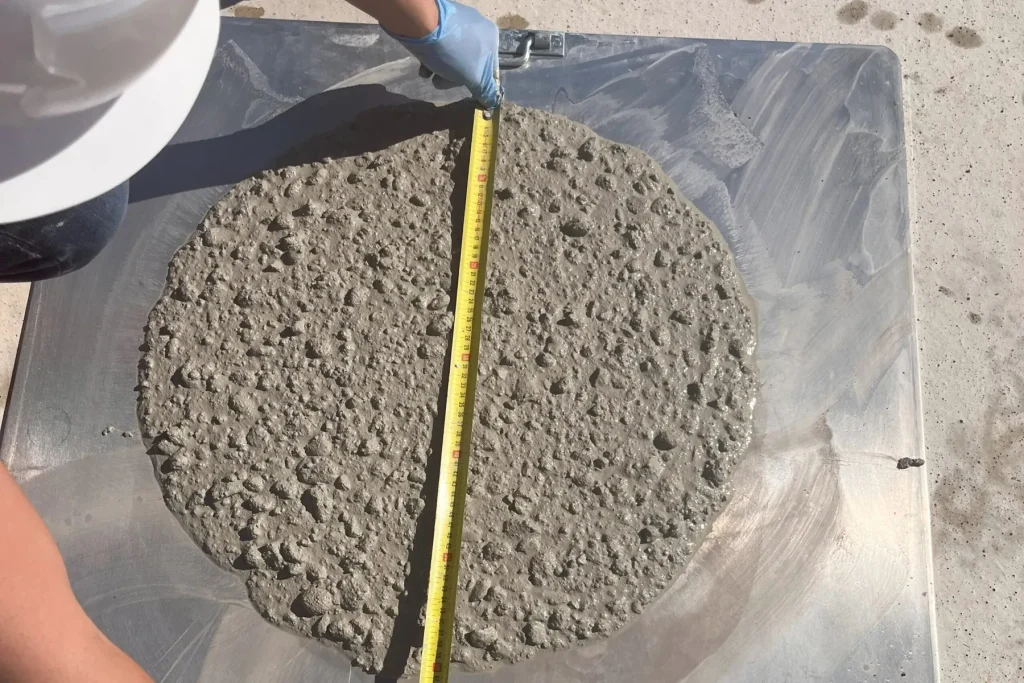
Slump cones & flow tables
Workability of fresh concrete on site and in trial mixes.
Air content meters
Pressure-method air meters for air-entrained concrete.
Cube, cylinder & beam moulds
Precision moulds that hold their dimensions over thousands of casts.
Curing tanks & chambers
Temperature-controlled curing for valid strength results.
Compression testing machines
Automatic machines with accurate pace-rate control for cubes and cylinders.
Flexure & splitting fixtures
Beam flexural and cylinder splitting tensile tests.
Rebound hammers
Fast, non-destructive surface hardness surveys of structures.
Ultrasonic pulse velocity
Assessment of uniformity, cracking and voids inside concrete.
Core drilling equipment
Cores from structures for strength confirmation.
Aggregate & rebar testing
Sieves, shakers, abrasion testing and Psaron RIB3D rebar measurement.
Test methods
Concrete testing standards
Methods we most often equip construction laboratories for.
| Test | Typical standards |
|---|---|
| Slump | ASTM C143 · EN 12350-2 |
| Air content (pressure method) | ASTM C231 · EN 12350-7 |
| Compressive strength | ASTM C39 · EN 12390-3 |
| Flexural strength | ASTM C78 · EN 12390-5 |
| Splitting tensile strength | ASTM C496 · EN 12390-6 |
| Rebound number | ASTM C805 · EN 12504-2 |
| Ultrasonic pulse velocity | ASTM C597 · EN 12504-4 |
| Drilled cores | ASTM C42 · EN 12504-1 |
| Aggregate sieve analysis | ASTM C136 · EN 933-1 |
| Reinforcing steel | ASTM A615/A615M · BS 4449 · ISO 15630-1 |
Buying guide
How to choose concrete testing equipment
The decisions that make or break a construction laboratory.
Compression machine capacity
Size the machine for your largest specimens and highest strength class. Cube and cylinder labs commonly use 1,500 to 3,000 kN frames. Automatic load-rate control is essential, since the standards specify the loading pace.
Platen and frame quality
Platen flatness, hardness and spherical seating affect results directly. Check them at installation and during periodic verification.
Curing capacity
Plan curing tanks or rooms for every specimen you will hold for 7, 28 and 56 days, with temperature control and monitoring.
Moulds that stay true
Cheap moulds distort, producing out-of-tolerance specimens and low strengths. Robust, machined moulds pay for themselves.
Non-destructive testing
Rebound hammers and UPV give quick surveys of structures, but need correlation with cores or specimens before estimating strength.
Site versus central lab
Site labs need rugged, portable equipment for fresh concrete; central labs need high-capacity machines, curing and reporting. Many contractors need both.
Technical guide
Concrete testing equipment explained: a technical guide
Why sampling and specimen making matter
Most low concrete strength results are caused by how specimens were made, not the concrete itself. Representative sampling, correct compaction, protection during the first day and correct curing are essential. Good concrete testing equipment makes these steps consistent, but training makes them reliable.
Cubes, cylinders and conversion
Cubes and cylinders of the same concrete give different strengths because of their shape. Specifications state which specimen to use; do not convert between them without an agreed basis.
Loading rate and machine condition
Strength results depend on the loading rate and on the condition of platens and spherical seats. Automatic pace control and regular verification of the compression machine keep results comparable.
Non-destructive testing in context
Rebound hammers and ultrasonic pulse velocity are valuable for comparing areas of a structure and finding weak zones, but they are influenced by surface condition, moisture and aggregate. Correlating readings with cores turns them into useful strength estimates.
Testing reinforcing steel
Structural performance depends on reinforcement as much as on concrete. Testing rebar for mass per metre, rib geometry and mechanical properties confirms that steel meets the specification.
Standards
Concrete testing equipment standards explained
EN 12350-2 and ASTM C143
Slump test methods for workability of fresh concrete using a standard cone and rod.
EN 12350-7 and ASTM C231
Air content of fresh concrete by the pressure method.
EN 12390-3 and ASTM C39
Compressive strength of hardened specimens: cubes or cylinders depending on the standard, with defined loading rates.
EN 12390-5 and ASTM C78
Flexural strength of concrete beams, important for pavements and precast elements.
EN 12390-6 and ASTM C496
Splitting tensile strength of cylinders, an indirect measure of tensile strength.
EN 12504-2 and ASTM C805
Rebound number methods using a rebound hammer for surface hardness surveys.
EN 12504-4 and ASTM C597
Ultrasonic pulse velocity methods for assessing uniformity and detecting defects.
EN 12504-1 and ASTM C42
Taking, examining and testing drilled cores from structures.
Budgeting
Concrete testing equipment: what affects the price in Pakistan
Indicative factors that change a quotation. We always explain the options so you can balance budget and capability.
Compression machine capacity and control
Automatic pace-rate control and higher capacity raise price but are required by modern standards and high-strength concrete.
Number and quality of moulds
Machined steel moulds cost more than light moulds but hold tolerances for years.
Curing infrastructure
Temperature-controlled tanks and curing rooms are a significant but essential investment.
NDT equipment
Rebound hammers are economical; digital UPV testers and data logging cost more.
Site versus central lab
Portable site kits and central-lab machines are separate budgets.
Rebar testing
Automated rebar geometry measurement such as Psaron RIB3D is an additional investment for rebar-heavy projects.
Applications
Who uses concrete testing equipment
Ready-mix plants
Trial mixes, production control and delivery tickets.
Contractors
Site acceptance testing and pour records.
Consultants
Independent verification for clients and regulators.
Precast producers
Release strength and product quality.
Construction laboratories
Third-party testing for projects across Pakistan.
Universities
Civil engineering teaching and research.
Set-up checklist
Concrete testing equipment buying checklist
Work through these points and your quotation will be faster and more accurate.
- Confirm cube or cylinder practice from your specification
- Size the compression machine for your strongest concrete
- Order enough moulds for daily casting plus spares
- Plan curing tank or room capacity and temperature control
- Equip slump, air content and temperature testing for site
- Add flexural and splitting tensile fixtures if specified
- Consider rebound hammer and UPV for structure surveys
- Plan core drilling and core preparation
- Arrange annual compression machine calibration
- Train technicians on sampling and curing
After-sales
Calibration and support
Compression machines must be calibrated, typically annually, to keep results valid. We support calibration and verification, platen checks and replacement parts.
We also supply moulds, cones, rods, capping materials and other consumables so your laboratory keeps running.
Typical set-ups
Typical concrete testing equipment configurations
Three common starting points. Every quotation is tailored to your tests and budget.
Site laboratory
Slump cone, air meter, moulds, curing tank and a compression machine for project acceptance testing on site.
Ready-mix or precast QC lab
Adds automatic compression control, flexural fixtures, aggregate sieves and expanded curing capacity for production control.
Independent testing laboratory
Adds splitting tensile, rebound hammer, UPV, core drilling, rebar testing and full calibration traceability for third-party work.
Avoid these
Common concrete testing equipment buying mistakes
Too few moulds
Running short of moulds leads to poorly cleaned or damaged moulds and invalid specimens.
Poor curing
Specimens left in the sun or without temperature control lose strength.
Manual load control
Inconsistent loading rates affect results. Use automatic pace control.
Damaged platens
Worn or uneven platens produce low and scattered strengths.
Using NDT without correlation
Rebound and UPV readings need correlation with cores before estimating strength.
Ignoring rebar
Reinforcing steel testing is part of structural quality; include it in planning.
Maintenance
Maintenance and calibration schedule
A practical routine that keeps results accurate. Always follow the manufacturer instructions and your quality system.
| Interval | Recommended tasks |
|---|---|
| Daily | Clean and oil moulds; check curing tank temperature; inspect platens. |
| Weekly | Check slump cone and rod; verify air meter. |
| Monthly | Review strength trends; check hydraulic oil. |
| Annually | Calibrate compression machine; verify moulds dimensionally. |
| As needed | Replace damaged moulds and platen inserts. |
Request for quotation
Concrete testing equipment quotation checklist
- Cube or cylinder specification
- Highest strength class
- Specimens per day
- Site or central lab
- Curing capacity
- NDT requirements
- Aggregate tests
- Rebar testing needs
- Delivery city
- Training needs
Local support
Concrete testing equipment support across Pakistan
We equip site labs, ready-mix plants, precast producers and construction laboratories across Pakistan.
We install compression machines, train technicians on sampling and curing, and support annual calibration and spare parts.
Glossary
Concrete testing equipment glossary
Characteristic strength
The strength below which a small specified percentage of results is expected to fall.
Slump
A measure of fresh concrete workability.
Air entrainment
Intentional microscopic air bubbles that improve freeze–thaw durability.
Pace rate
The loading rate specified for compression tests.
UPV
Ultrasonic pulse velocity, used to assess concrete uniformity.
Rebound number
The surface hardness reading from a rebound hammer.
Core
A cylinder drilled from hardened concrete for testing.
Capping
Preparing cylinder ends so load is applied evenly.
Related equipment
Further reading: ASTM C39 compressive strength
FAQ
Concrete testing equipment: frequently asked questions
What capacity compression testing machine do I need?
It depends on specimen size and the highest strength concrete you test. Common choices are in the 1,500–3,000 kN range for cubes and cylinders. Share your specimen types and strength classes and we will recommend the capacity and controls.
Can strength be checked without breaking samples?
Rebound hammers and ultrasonic pulse velocity testers give non-destructive indications of in-place quality and uniformity. They are normally correlated with cores or specimens before estimating strength.
Cubes or cylinders?
It depends on your specification. EN and BS practice commonly uses cubes; ASTM uses cylinders. We supply moulds and machine fixtures for both.
Why do curing conditions matter?
Strength development depends on temperature and moisture. Specimens cured outside the specified conditions give misleading results, which is why standards define curing precisely.
Do you supply site laboratories?
Yes. We equip site labs for projects across Pakistan with slump, air, moulds, curing and compression testing equipment.
How often should a compression testing machine be calibrated?
Typically annually, or after relocation or repair, in line with your quality system and the standard.
Can you supply equipment for a site laboratory?
Yes. We supply slump, air, moulds, curing tanks and compression machines for site labs across Pakistan.
What causes low cube results?
Common causes include poor compaction, wrong curing temperature, damaged moulds and incorrect loading rate, as well as the concrete itself.
Do you supply aggregate testing equipment?
Yes, including sieves, shakers and abrasion testing equipment.
Can concrete testing equipment be used for mortar and blocks?
Many machines test mortar and masonry units with suitable platens and fixtures.
Do you supply concrete testing kits for small sites?
Yes, compact site kits with slump, moulds and curing equipment.
Can one machine test cubes and cylinders?
Yes, with suitable platens and spacers within capacity.
Do you supply capping equipment?
Yes, where your method requires capping or end preparation.
What size compression machine is needed for 150 mm cubes?
It depends on the highest concrete strength you test. High-strength concrete in 150 mm cubes can require high forces, so machines of 2,000 kN or more are common. We size the machine to your strength classes.
How long should concrete specimens be cured?
Standard tests use 7 and 28 days, with other ages as specified. Specimens must be cured at the specified temperature and moisture until testing.
Can you supply equipment for self-compacting concrete tests?
Yes, including slump-flow base plates and related apparatus where your specification requires them.
What is the difference between a site lab and a central lab?
A site lab focuses on fresh concrete testing and specimen making; a central lab holds curing facilities and compression machines and issues reports. Many projects use both.
Do you supply core drilling machines for buildings?
Yes, core drilling equipment for taking cores from slabs, columns and walls.
How many cubes should be made per sample?
Specifications usually require at least two or three specimens per test age, so results can be averaged and outliers identified. Check your project specification.
What is the best way to transport fresh specimens?
Leave specimens undisturbed in their moulds for the first day, protected from vibration, sun and drying, then transport carefully to the curing facility. Rough handling at early age reduces strength.
Can concrete testing equipment test paving blocks and kerbs?
Yes, with suitable platens, fixtures and capacity. Paving blocks and kerbs have their own product standards specifying the test method.
How do I choose between rebound hammer and UPV?
The rebound hammer assesses surface hardness quickly; UPV assesses internal uniformity and defects. Many investigations use both, then correlate with cores.
Request a quote
Get a quote for concrete testing equipment
An engineer replies within one working day with a recommendation and a quotation.
- Phone+92 21 3416 2044
- WhatsApp+92 331 229 5410
- Emailsales@comprehensive-sol.com
- OfficePlot No. 400, Delhi Saudagaran Society, Shah Faisal Colony, Karachi 75210