
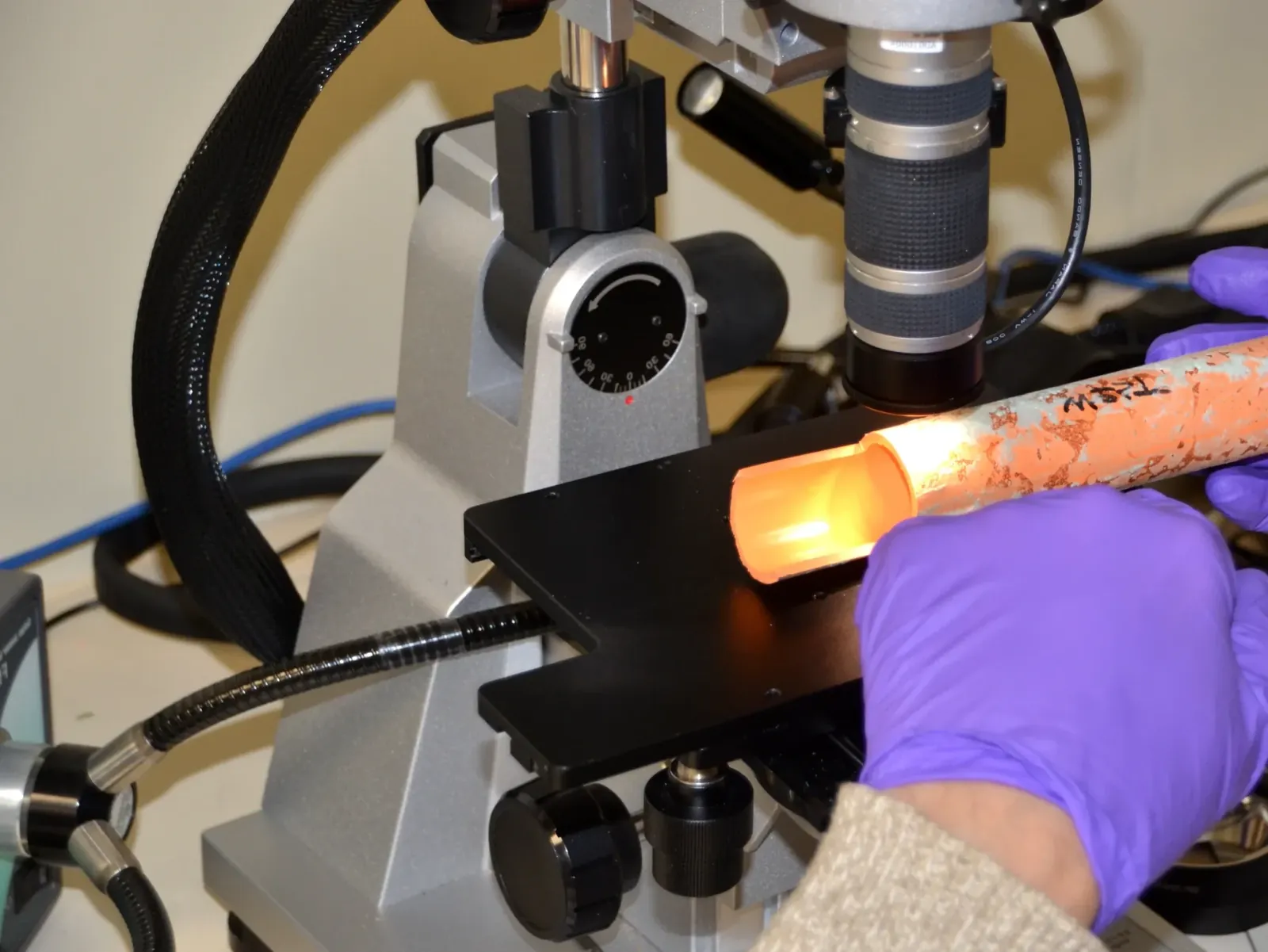
Elastomers · cure · hardness
Rubber testing equipment for consistent compounds
Rheometers, Mooney viscometers, hardness testers and physical testing equipment for tyre, footwear, hose, belting, seal and moulded rubber producers.
On this page
Overview
Why rubber testing equipment protects your production
Rubber products depend on compounds that process and cure the same way every batch. Small changes in raw rubber, fillers, oils or curatives change scorch safety, cure time and final properties, often without any visible difference in the mixed compound.
A rubber laboratory catches those changes with three groups of tests: Mooney viscosity of raw rubber and compounds (processability), cure characteristics on a moving die rheometer (scorch and cure time), and hardness and physical properties of vulcanised samples.
We supply complete rubber testing equipment packages, including two-roll mills and presses for preparing test sheets, so your lab can test every batch quickly and consistently.
What we supply
Rubber testing equipment we supply
Instruments for compound QC, development and finished-product testing.
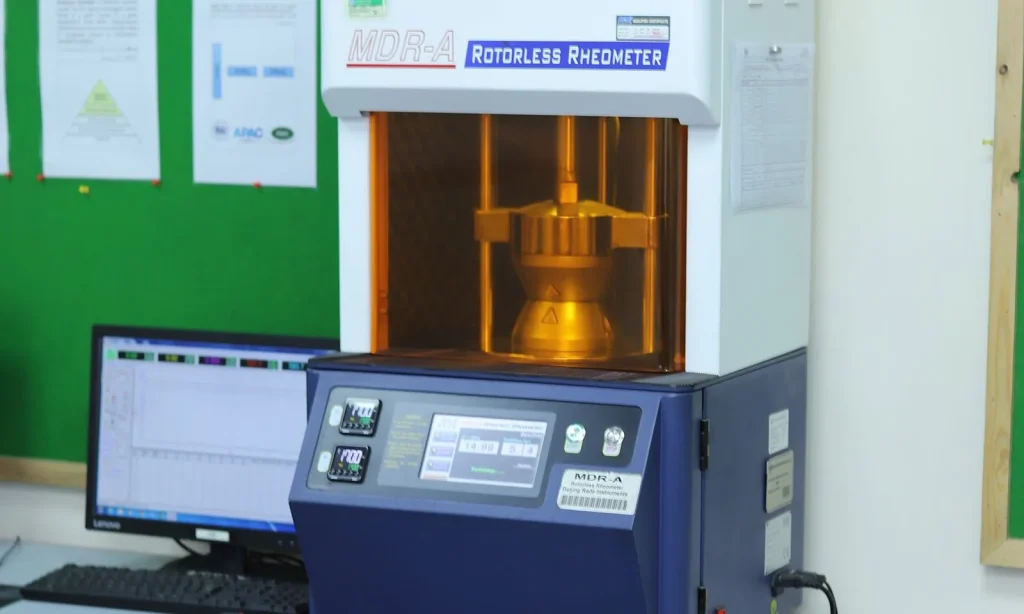
Moving die rheometers (MDR)
Cure curves with scorch time, cure time and torque values for every batch.
Mooney viscometers
Viscosity, scorch and stress relaxation of raw rubber and uncured compounds.
Shore A / D durometers
Fast hardness checks on compounds and finished parts, bench or handheld.
IRHD hardness testers
International rubber hardness for precise and small-part measurements.
Tensile testing machines
Tensile and elongation of dumbbells with rubber grips and long-travel extensometers.
Tear, abrasion & compression set
Durability tests that predict service performance of seals, belts and soles.
Ageing ovens
Heat ageing to assess property retention over time.
Mills & presses
Two-roll mills and platen presses (including COLLIN) to mix and mould test sheets.
Test methods
Rubber testing standards
Common methods for rubber compound and product testing.
| Test | Typical standards |
|---|---|
| Cure characteristics (MDR) | ASTM D5289 · ISO 6502-3 |
| Mooney viscosity | ASTM D1646 · ISO 289-1 |
| Durometer hardness | ASTM D2240 · ISO 48-4 |
| IRHD hardness | ISO 48-2 |
| Tensile properties | ASTM D412 · ISO 37 |
| Tear strength | ASTM D624 · ISO 34-1 |
| Compression set | ASTM D395 · ISO 815-1 |
| Heat ageing | ASTM D573 · ISO 188 |
Buying guide
Setting up a rubber testing laboratory
What to prioritise, and why.
Rheometer first
An MDR tests a compound’s cure in minutes and is the single most useful instrument for batch release in a mixing operation.
Add Mooney for incoming rubber
Mooney viscosity checks raw rubber and masterbatch lots before they reach the mixer, where problems are cheapest to catch.
Hardness on every batch
Durometer or IRHD hardness on cured samples is quick and correlates with many end-use properties.
Physical tests for development
Tensile, tear, abrasion and compression set predict service life and are essential for new compounds and customer approvals.
Consistent test sheets
Mill and press conditions affect results. A lab mill and press with controlled temperature and pressure gives repeatable specimens.
Data and traceability
Rheometer software with batch records and pass/fail limits makes release decisions faster and auditable.
Technical guide
Rubber testing equipment explained: a technical guide
Reading a cure curve
A moving die rheometer plots torque against time as the compound cures. The minimum torque (ML) reflects the compound’s viscosity, the scorch time shows when curing starts, the time to 90% cure (t90) guides press cycles, and the maximum torque (MH) relates to crosslink density and stiffness. Comparing these values with limits releases or holds each batch.
Why Mooney viscosity still matters
Mooney viscosity indicates how a raw rubber or compound will process in mixing, extrusion and moulding. Variation between raw rubber lots can change mixing behaviour and final properties, so testing incoming rubber with rubber testing equipment such as a Mooney viscometer prevents problems early.
Hardness and its limits
Hardness is quick and useful, but two compounds with the same hardness can behave very differently in tension, tear or ageing. Hardness should complement, not replace, rheometer and physical tests.
Ageing and service life
Heat ageing tests expose specimens to elevated temperature for a set time, then measure property retention. They help predict how seals, hoses and belts will perform in service, and are often required for customer approvals.
Compression set for sealing products
Seals and gaskets must recover after being compressed. Compression set testing measures the permanent deformation after compression at a set temperature and time, which is a key acceptance test for sealing products.
Test sheet preparation
Results depend heavily on how test sheets are mixed and moulded. A laboratory two-roll mill and press with controlled temperature, time and pressure make test sheets consistent, so differences in results reflect the compound rather than the preparation.
Using rubber testing equipment data for process control
Trending rheometer and Mooney results over time reveals drift in raw materials, weighing or mixing before products fail. Rubber testing equipment with good software makes this trending simple.
Standards
Rubber testing equipment standards explained
ASTM D5289 and ISO 6502-3
Rotorless cure meter methods (moving die rheometers) defining die geometry, oscillation and how cure parameters such as scorch and t90 are reported.
ASTM D1646 and ISO 289-1
Mooney viscometer methods for viscosity, scorch and stress relaxation of raw and compounded rubber.
ASTM D2240 and ISO 48-4
Durometer hardness methods covering Shore A, D and other scales, including specimen thickness and reading time.
ISO 48-2
International rubber hardness (IRHD) methods for normal, high, low and micro hardness ranges.
ASTM D412 and ISO 37
Tensile stress-strain properties of vulcanised rubber using dumbbell or ring specimens.
ASTM D624 and ISO 34-1
Tear strength methods using different specimen geometries such as trouser, angle and crescent.
ASTM D395 and ISO 815-1
Compression set methods measuring permanent deformation after compression at set temperature and time.
ASTM D573 and ISO 188
Accelerated heat ageing methods for assessing property retention.
Budgeting
Rubber testing equipment: what affects the price in Pakistan
Indicative factors that change a quotation. We always explain the options so you can balance budget and capability.
Rheometer type
Moving die rheometers vary by temperature control, data analysis and automation.
Mooney options
Stress relaxation and automatic sample handling add cost.
Hardness testing
Handheld durometers are economical; stand-mounted and automated IRHD testers cost more but improve repeatability.
Physical testing
Tensile machines with long-travel extensometers, tear and abrasion testers add to the lab budget.
Sample preparation
Mills and presses with controlled temperature and pressure are essential.
Software
Batch management and pass/fail release features add value for production QC.
Applications
Who uses rubber testing equipment
Tyre & tube producers
Compound control from mixing to curing.
Footwear
Sole compounds, hardness and abrasion resistance.
Hose & belting
Cure consistency and tensile properties.
Seals & gaskets
Compression set and heat ageing.
Moulded rubber goods
Batch release and finished-part testing.
Universities & research
Elastomer science and compound development.
Set-up checklist
Rubber testing equipment buying checklist
Work through these points and your quotation will be faster and more accurate.
- Map compounds and products to test methods
- Start with an MDR for batch release
- Add a Mooney viscometer for incoming rubber
- Add hardness testing for every batch
- Plan physical tests for development and approvals
- Include a two-roll mill and press for test sheets
- Set cure temperatures and test times
- Define pass/fail limits for release
- Plan calibration of torque and temperature
- Train technicians on sample preparation
After-sales
Support and consumables
We install and commission your rubber testing equipment, set up test programmes and pass/fail limits, and train your technicians.
We supply dies, films, cutting tools, grips and other consumables, and help with calibration and verification.
Typical set-ups
Typical rubber testing equipment configurations
Three common starting points. Every quotation is tailored to your tests and budget.
Mixing-room release lab
An MDR and Shore A durometer to release every batch before it goes to production.
Full compound QC lab
Adds a Mooney viscometer for incoming rubber, a tensile machine with long-travel extensometer, density and ageing ovens.
Development & approval lab
Adds tear, abrasion, compression set and dynamic testing, plus a two-roll mill and press for test sheets and new compound trials.
Avoid these
Common rubber testing equipment buying mistakes
Releasing batches on hardness alone
Hardness can look right while cure behaviour is wrong. Use an MDR for release.
Inconsistent test sheets
Mill and press conditions change results. Control temperature, time and pressure.
Wrong test temperature
Test at the cure temperature specified for the compound.
Not testing raw materials
Mooney testing of incoming rubber catches problems before mixing.
No pass/fail limits
Define acceptance windows for scorch, t90 and torque.
Neglecting calibration
Torque and temperature drift silently without periodic verification.
Maintenance
Maintenance and calibration schedule
A practical routine that keeps results accurate. Always follow the manufacturer instructions and your quality system.
| Interval | Recommended tasks |
|---|---|
| Daily | Clean dies; check temperature stability; run a reference compound if used. |
| Weekly | Inspect seals and films; check durometer with test blocks. |
| Monthly | Review control charts for drift. |
| Annually | Calibrate torque, temperature and tensile force. |
| As needed | Replace dies, seals and cutting tools. |
Request for quotation
Rubber testing equipment quotation checklist
- Compounds and products
- Test methods and temperatures
- Batches per day
- Raw rubber types
- Physical tests required
- Sample preparation needs
- Software and release workflow
- Space and utilities
- Delivery city
- Training needs
Local support
Rubber testing equipment support across Pakistan
We support rubber producers across Pakistan, including footwear in Lahore and Sialkot and tyre and moulded goods manufacturers, with practical compound QC laboratories.
We install equipment, set up test programmes and pass/fail limits, and supply consumables and calibration support.
Glossary
Rubber testing equipment glossary
Scorch time
The time before a compound begins to cure, indicating processing safety.
t90
The time to reach 90% of maximum cure torque.
MH / ML
Maximum and minimum torque on a cure curve.
Mooney viscosity
Viscosity of raw rubber or compound measured by a rotating disc.
Shore A
A durometer scale for soft rubbers.
IRHD
International rubber hardness degree.
Compression set
Permanent deformation after compression, critical for seals.
Vulcanisation
The curing reaction that crosslinks rubber.
Related equipment
Further reading: ASTM D5289 rubber cure (MDR)
FAQ
Rubber testing equipment: frequently asked questions
MDR or Mooney viscometer: which do I need?
They answer different questions. A Mooney viscometer measures viscosity and scorch of raw rubber and uncured compound, which relates to processability. An MDR measures how the compound cures: scorch time, cure time and torque. Most compound QC labs use both.
How long does an MDR test take?
Typically a few minutes per sample, depending on cure temperature and compound, which makes it practical for testing every mixed batch.
Can you supply equipment to prepare rubber test sheets?
Yes. Two-roll mills and laboratory presses, including COLLIN equipment, mix and mould test sheets under controlled conditions.
Shore or IRHD hardness?
Shore durometers are fast and common for QC. IRHD offers better precision and suits small parts and specifications that call for it. Many labs use both.
Do you support rubber labs outside Karachi?
Yes, including Lahore, Sialkot, Faisalabad and Gujranwala, with installation and training at your site.
What temperature should MDR tests run at?
Usually the cure temperature specified for the compound or product, defined in your test method or customer specification.
Can one rheometer test all my compounds?
Yes. Test programmes with different temperatures and times can be stored for each compound.
Do I need both Shore A and Shore D?
Only if you test both soft and hard rubbers or plastics. Most rubber labs mainly use Shore A.
How are rheometers calibrated?
Torque and temperature are verified with reference standards at defined intervals.
Can you support footwear and tyre producers outside Karachi?
Yes, including Sialkot, Lahore and Gujranwala.
Can rheometer data be exported?
Yes, rheometer software typically exports results and curves for records and analysis.
How many MDRs does a mixing room need?
It depends on batch volume and test time; we calculate it with you.
Do you supply rubber dumbbell cutting dies?
Yes, for standard specimen shapes.
Can a moving die rheometer test silicone and EPDM compounds?
Yes. Rheometers test a wide range of elastomers, including natural rubber, SBR, EPDM, nitrile and silicone, using test temperatures and times suited to each compound.
What is the difference between ODR and MDR?
An oscillating disc rheometer (ODR) uses a rotor embedded in the sample; a moving die rheometer (MDR) is rotorless, giving faster temperature recovery and better repeatability. Most modern labs choose MDR.
How many samples can a rubber lab test per shift?
It depends on the instruments and test times. An MDR test commonly takes a few minutes, so one instrument can test dozens of batches per shift; physical tests take longer and are usually periodic.
Do you supply tensile test machines specifically for rubber?
Yes, with pneumatic or self-tightening grips and long-travel extensometers suited to high elongations.
Can rubber testing equipment help with customer complaints?
Yes. Retained samples and batch records from rheometer and physical tests help identify whether a problem came from the compound, the process or the application.
Request a quote
Get a quote for rubber testing equipment
An engineer replies within one working day with a recommendation and a quotation.
- Phone+92 21 3416 2044
- WhatsApp+92 331 229 5410
- Emailsales@comprehensive-sol.com
- OfficePlot No. 400, Delhi Saudagaran Society, Shah Faisal Colony, Karachi 75210